Showing posts with label FolkDance. Show all posts

Thursday, May 19, 2011

Friday, November 5, 2010

জলদেগে জলাইশোরী


পশ্চিম দিনাজপুরে জলদেগে জলাইশোরী নামে একটি আচার অনুষ্ঠান আজও প্রচলিত আছে। এটি আদতে বৃষ্টির জন্য প্রার্থনা গান আর কিছুটা নাচও। এই গান নাচে কেবল মেয়েরাই অংশগ্রহণ করেন। খরায় যখন এলাকার মাঠঘাট জ্বলে, মেঘের লেশমাত্র থাকেনা তখন গ্রামের মেয়েরা বিবস্ত্রা হয়েই একটি ঘট নিয়ে গ্রামজুড়ে প্রার্থনায় বের হন। কোনো একটি মেয়ের মাথায় থাকে ঘট তাই তার নাম হবে ঘটধরি। ঘটধরি কন্যার হাতে থাকবে পুরোনো একটি ছাতা আর তার সখির হাতে থাকবে একটি বড় ধামা। এই ধামায় থাকে নানান পুজো উপাচার। এই আচার-অনুষ্ঠানের পরিচালিকার কাছে থাকে সকলের পরিধেয় বস্ত্র। বিবস্ত্রা রমনীরা গান গাইতে গাইতে একের পর এক গৃহস্থের বাড়ি আঙিনাতে প্রবেশ করেন। এই গান চলাকালীন কোনো পুরুষের প্রবেশ নিষেধ – এবং চিরাচরিত ঐতিহ্যশালী সমাজের প্রত্যক সদস্যেরমতই এই সমাজের সদস্যরা এই সামাজিক বিধিনির্দেশ কড়ায়-গণ্ডায় মেনে চলেন। ঘট নামানো হলে চলে চাষের অভিনয়। তারপর ব্রতচারিনী আর গৃহস্থ রমনীরা সকলে মিলে গান গাইতে থাকেন – সঙ্গে চলে নাচও।
আইস মেঘা বইস কাছে
খাও বাটাং পান
তোমার জন্য বাটাং পান
সাজাইয়ে রাখিছি
বরসিয়া খাওরে
----
মোঘো ওদে নাগায় ভাইরে
মেঘে অন্ধকার
মেঘের ভিতি দেখি ভাইরে
হালি ছাড়ে হাল
জমীতে পানি নাইরে
কিসে বহিম হাল
বাসুয়া বলদিয়া বইছে হাল
ওমোর গসাই রে
তাহনে দুব্বা নোতা ওঠে
এপ পাট মই দুই পাট মই
তাহনে দুব্বা নোতা ওঠে।

Thursday, November 4, 2010

ষাইটোল ব্রত

ষাইটোল ব্রত
উত্তবঙ্গের কোচবিহার জেলারই ব্রত। কোচবিহার যেহেতু এক সময় নৃপতি শাসিত রাজ্য ছিল তাই এই ব্রতটি নিয়ে বহু আলোচনা বয়ে গিয়েছে। সাধারণতঃ সন্তান কামনা আর সন্তান কল্যানে এই ব্রত অনুষ্ঠিত হয়ে থাকে আজও। ষাইটোল এক লোকদেবী। হয়ত ষষ্ঠী ঠাকরোনইবা। কেননা ষাইটোলের বহু গানে তাঁর উল্লেখ পাওয়া যায় – ষষ্ঠী মায়ের জন্মরে হইল নন্দী গোয়ালের ঘরে, কি ষষ্ঠী মা মনদিসে ঘোরে। বন্ধ্যা নারীর সন্তান লাভসহ সন্তান ঘিরে নানান সাংসারিক আকাঙ্খা ষাইটোলের ব্রতের ধারাভষ্যে সহজেই উঠে আসে। এই ব্রতে লোক কাহিনীর নায়িকা লীলাবতী বা নীলা স্বামী পরিত্যক্তা হয়ে যখন দিন কাটান তাঁর জবানে উঠে আসে যেন ফুল্লরার বরোমাস্যা। 
ব্রতটিতে গ্রাম্য কিশোরীরা হাঁটু পর্যন্ত কাপড় পরে প্রথমে ঢাকিকে বন্দনা করেন – ভাল্ কইরা বাজান রে ঢাকুয়ার সুন্দর কমলা নাচে। সঙ্গে দোতরা, বাঁশী, মন্দিরাও বাজানো হয়। ঢাকীকে সামনে রেখে ষাইটোলের নানান বৃত্তান্ত গাওয়া হয়। কয়েক বছর আগে ফুলতি গিদালি বর্মণ কলকাতায় এই নাচ দেখিয়ে যান।

তিস্তার ভেদৈ খেলি বা মেছেনি ব্রত

উত্তরবঙ্গের লোকজীবনে তিস্তা নদীর প্রভাব বেশ গুরুত্বপূর্ণ বিশেষ করে জলপাইগুড়ি জেলায় – কখোনো সে দুকুল ভাসায় কখোনো আবার সবুজে সবুজে ভরে দিয়ে সভ্যতার বিকাশের সঙ্গী হয়ে ওঠে। উত্তরবঙ্গে তাই তিস্তার বড় আদর – তাকে সোহাগে রাখার, তাকে আদরে রাখার। তিস্তাকে তাই আদর করে সম্বোধন করা হয় বুড়ি নামসহযোগে। উত্তরবঙ্গীয়রা তাই তিস্তাবুড়ির খ্যাপামি নিয়ে ছড়া কাটে, গান বাঁধে, ঘটা করে পুজো দেয়। তিস্তাবুড়ির এই ব্রত স্থানীয় ভাষায় বরত্ রূপে চিহ্নিত। এই গানের সঙ্গে নাচেন কিশোরীরা। একে বলে মেচেনি বা মেছুনিখেলি। বেত বা বাঁশএর একটি ছোট ঝাঁপি লাল কাপড়ে মোড়া – তার মধ্যে তেল সিঁদুর মাখানো একটি ফুলদিয়ে সাজানো ঘট বসানো। এটি তিস্তা মাই(মাও)এর প্রতীক। একে বড় ছাতা দিয়ে খরবৈশাখের প্রখর রোদ্দুর থেকে আড়াল করে বাড়ি বাড়ি ঘুরে চলে এ নাচ। বয়স্কারা তাঁদের ঘিরে তালি দিয়ে তাল রাখেন। করতালও বাজে। মেয়েরা খাটো শাড়ি পরে তাতেই ঊর্ধাঙ্গ জড়িয়ে কোমর বাঁকিয়ে বাঁকিয়ে ঘুরে ঘুরে নাচে। সামনের দিকে ঝুঁকে দুই হাতে শাড়ির আঁচল, স্থানীয় লব্জে ফোতা বা পাটানি, মাটিতে ছুঁইয়ে দেয়। আবার সোজা হয়ে উঠে হাতে তালি দেয়। এক তাই থাপুনি(তালি) নাচ বলে। নাচটিকে বলে নাচানিয়া। এচটি গানের কলি – বড় বাড়িখন দেখিয়া আইলম লখমীমাও। বড় পিড়াখন পাতিয়া দাও। লখমী মাওক আমার সিন্দুর দেয় হে। সিন্দুর না থাকে যদি ইট ভাঙিয়া দাও হে। অথবা তিস্তাবুড়ির নামান গেহেচে আনন্দে বরিয়া নেওগে বড়য় হাউসালি, হামার পঞ্চ বাহিনী।

Friday, July 2, 2010

Gambhira Mask of Dinajpur, Malda

THE CRAFT OF mask making in West Bengal is closely related to the folk dance forms,such as the ritual dance masks of Darjeeling,Gambhira masks of Maldah and chhau masks of Purulia.The former two are made of wood,the latter is made out of papier-mache using moulds.Gambhira dance and gamdbhira songs were quite popular in Dinajpur and Maldah district of Bengal.Lord Shiva,is also known as Gambhir and Gambhir was originally celebrated as a puja,worship.The dance is a combination of narrative,song and music whihc resembles a folk play.The performers wear gambhira masks.The play is enacted by the character of a grandfather who narrates the story to a grandson character and the refrain is sung by a chorus. Gambhira reflects contemporary social problems.The folk dance is performed to the accompaniment of folk instruments such as the harmonium,flute,drum and judi.The masks are made from locally available wood of mango,gambhari and neem trees.The circumference of the log to be carved into a mask has to be around two feet.The craftsperson according to his imagination carves the mask and then paints it with bright colours.
Ajit Sarkar is one of the revered craftperson of this gambhira mask making.

Saturday, May 8, 2010

Tusu Dance

Tusu DanceWest Bengal is a land of rich culture and lots of festivity. Almost every region in the state has a specific folk dance and music attached to it. These folk traditions are basically related to some specific season of festival. The Tusu Dance of Birbhum district is one of them. It is basically performed in the month of Pausa, during the Gregorian months of December and January. The dance is basically related to the Tusu Parab (Tusu Festival), which is celebrated on the day of Makar Sankranti.

Tusu dance is basically the celebration of the arrival of an auspicious and pleasant season. Groups of girls from the district go to the riverside every evening, in the Pausa month, to sing and perform. On the day of Makar Sankranti, they gather together at the riverside, to worship the clay and cowdung idol of Goddess Tusu. They sing and perform dances in front of the deity, asking for a good groom. The dance is very elegant and graceful and creates a wonderful atmosphere, when accompanied by a melodious song from the rich collection of Tusu music.

The entire Tusu dance has traditional-folk essence attached to it. The dance is performed by men as well, when it is known as ' Bhaduriya Saila'. In Tusu dance man move in clockwise direction and the women in anti-clockwise direction. It is basically performed by unmarried girls and boys and at some places, it is mandatory to be performed by a virgin girl. It is customary for the dancers to take a ceremonial bath in the river before this performance. The dance is performed in groups and is simple in nature, without any accompanying musical instrument.

Friday, May 1, 2009

RAIBENSE DANCE

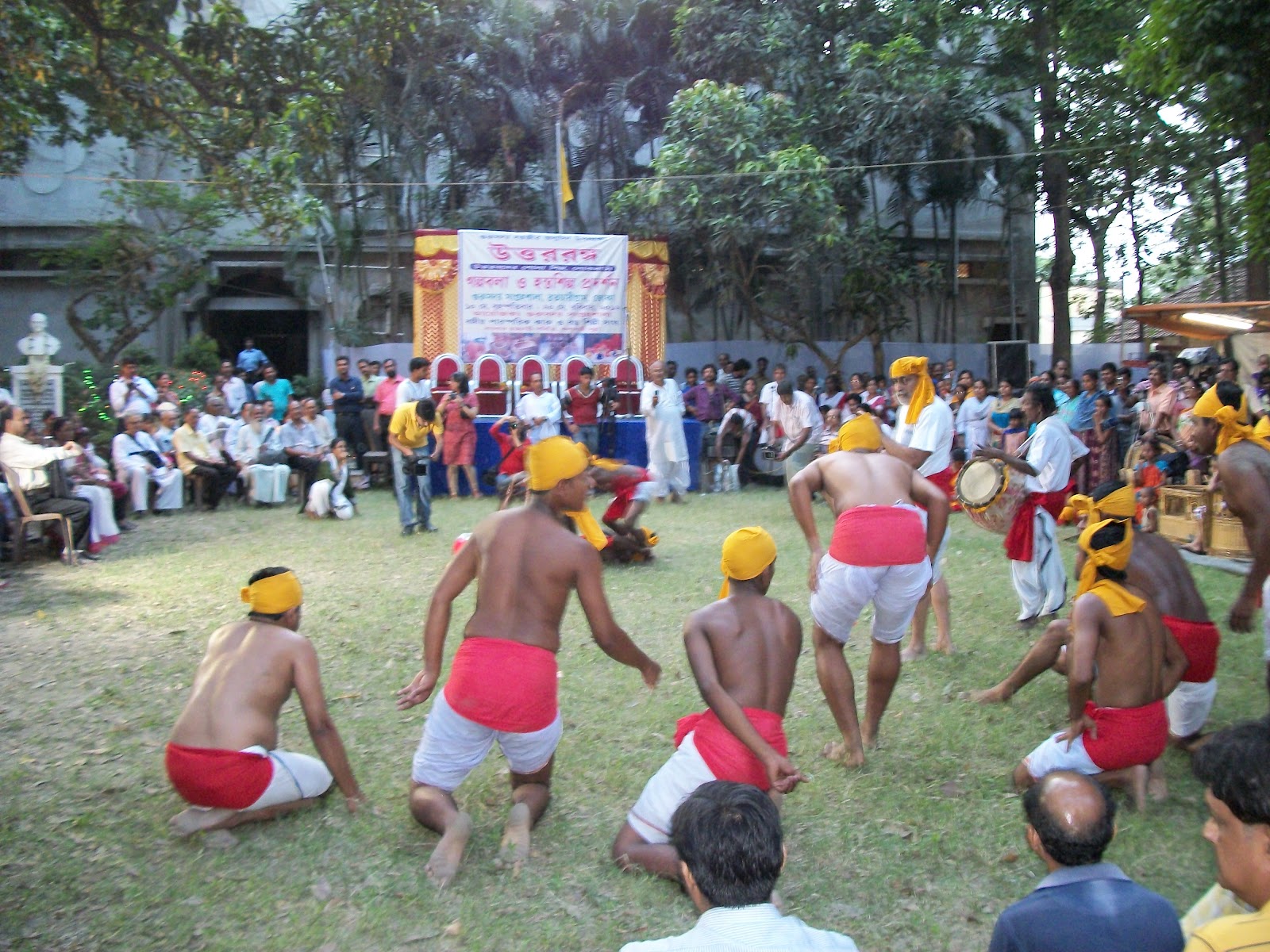
The Raibense dance of Birbhium district is a traditional system with a martial motif. Dance is a series of vigorous physical exercises, in which the erect torso has a Raibense are trained for long periods before letting them practice it alone. The dance requires strict codes and discipline to be followed to become a successful Raibense dancers important part to play. The dancers begin in a single file and then make a circle. Hops, jumps and circles are characteristic. Skills with the shield and the spear and the trishul are common. Sophisticated moves with these weapons are also performed simultaneously. A percussion instrument accompanies the dance.
Sarbhuj, a contemporary dance theater reviving this dance form and porting it to the urban middleclass theatre.

Saturday, April 18, 2009

MukhaKhail/MaskDance

Practiced in the Tarai Region of Jalpaiguri district of Northern parts of Bengal. Mask dance practiced by the rural people representing various ethnic groups. Masks are made locally using locally available wood. Kushmandi Block is the main centre at present. Masks of animals like monkey, Tiger, Gods & Goddesses such as Kali, Shiva, and also of some fictitious comic characters Bura-Buri are made. Male dancers wear these masks with suitable attire and perform. The dancers are accompanied by drummers and local flute players.

Naachni

Practiced in Tribal areas of Bangla. The Bhumija kings of Jharhkandi areas of Bengal introduced courtyard dance. Later disintegration of king’s court let the women assimilated in the folk community and developed a different style on their own. They are social outcast. But most of them like PostoBala, BimalaDevi are most popular in this area. One can find at least 50000 people in a naachni programme. A group of women use to dance and then the Rasik use to play madal or harmonium or other instruments and sings Jhumurs accordingly.
Rasiks are the guardians of the Naachnis. They are the trainers and singers. Naachnis use to stay with Rasiks in his house with a separate arrangements. Naachnis are social out casts, but they are the stars of Jharkhandi belt.

Friday, April 17, 2009

BrataNritya(RitualDance)

Brata Dance a form of folk dance performed on the occasion of a brata(ritual), a Hindu ritual vow, undertaken in order to attain some wish or desire.
Generally Hindu women observe this vow. Bratas belong to two classes: those related to the scriptures and those related to folk religion. While there is a conspicuous absence of songs and dance in religious bratas, women spontaneously express their material desires through dance and song in folk worship.
Adolescent girls participate in most of the brata dances. Generally, married women take part in Surya (Sun) Brata, Kartik Brata and Meghranir Kulanamano Brata (literally, the brata of the Cloud Queen lowering the kula or winnowing fan). Brata dances are performed in groups by both unmarried girls and married women. The dances are performed softly and slowly in an anti-clockwise movement. Married women, their heads modestly veiled, perform the Kulanamano Brata dance to invoke the rain clouds. Holding a corner of their saris in their right hands, they raise their kulas above their heads with their left hands. They then go round the brata-site several times, chanting rhymes.
Brata dances mainly depend on the movements of legs, hands and waist. But the postures of adolescent girls are markedly different from those of married women who swing and swirl their waists and bosoms in a display of sexuality. The brata dances of married women are an expression of their maternal urges.

Sunday, April 12, 2009

Raibense

The Raibense dance of Birbhium district is a traditional system with a martial motif. Dance is a series of vigorous physical exercises, in which the erect torso has a Raibense are trained for long periods before letting them practice it alone. The dance requires strict codes and discipline to be followed to become a successful Raibense dancers important part to play. The dancers begin in a single file and then make a circle. Hops, jumps and circles are characteristic. Skills with the shield and the spear and the trishul are common. Sophisticated moves with these weapons are also performed simultaneously. A percussion instrument accompanies the dance.

A group called SHOROBHUJ(Six Hand) indeed developed and revitalized this dance form and doing a regular performance.

Wednesday, April 1, 2009

DeodhaniDance


ese are deodhani dance performed
at LokprakritiUtsav'07